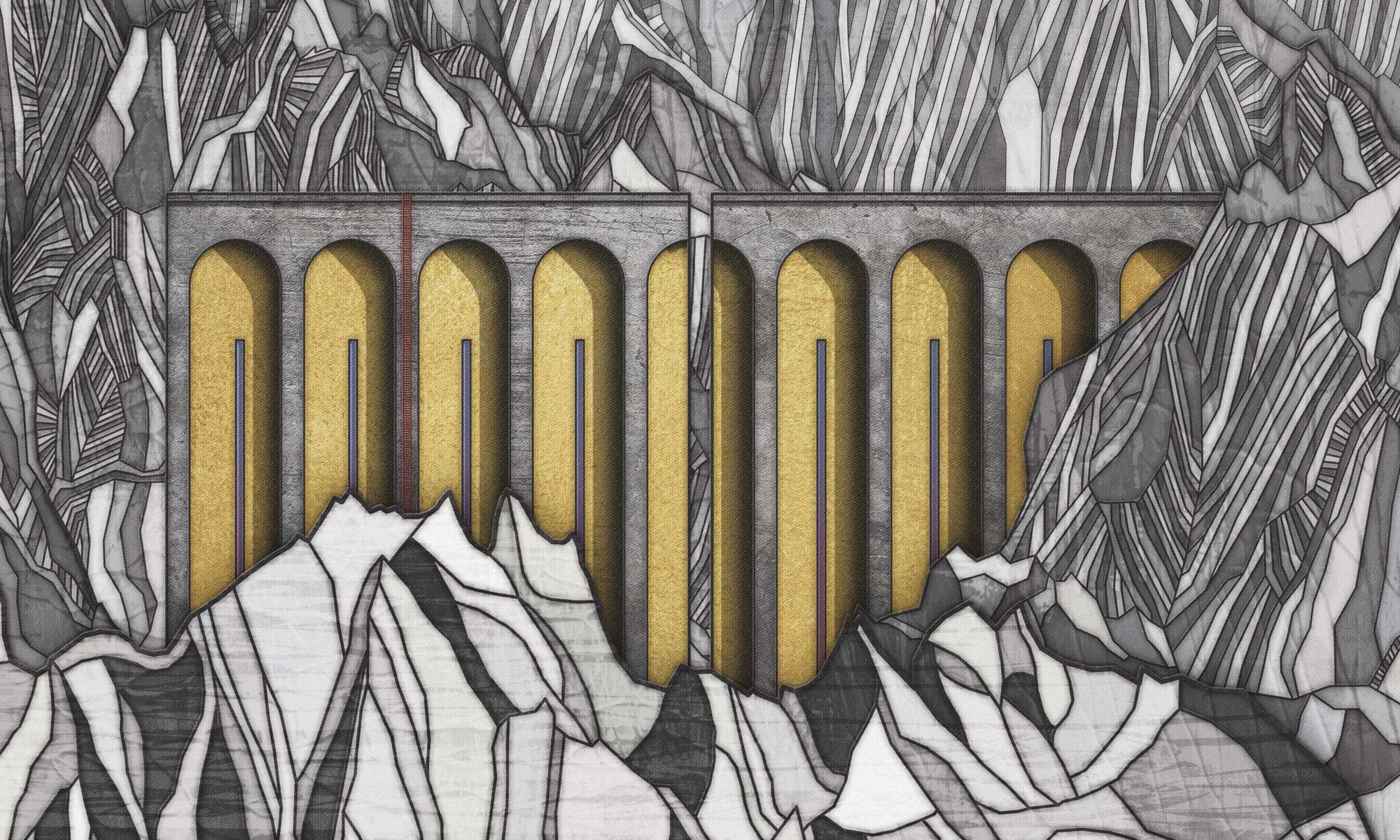
Row House in Sumiyoshi – 1/100 paper model

DESIGNED BY Tadao Ando and completed in Osaks, 1976, the Row House in Sumiyoshi is known for its minimalist expression without exterior windows. 
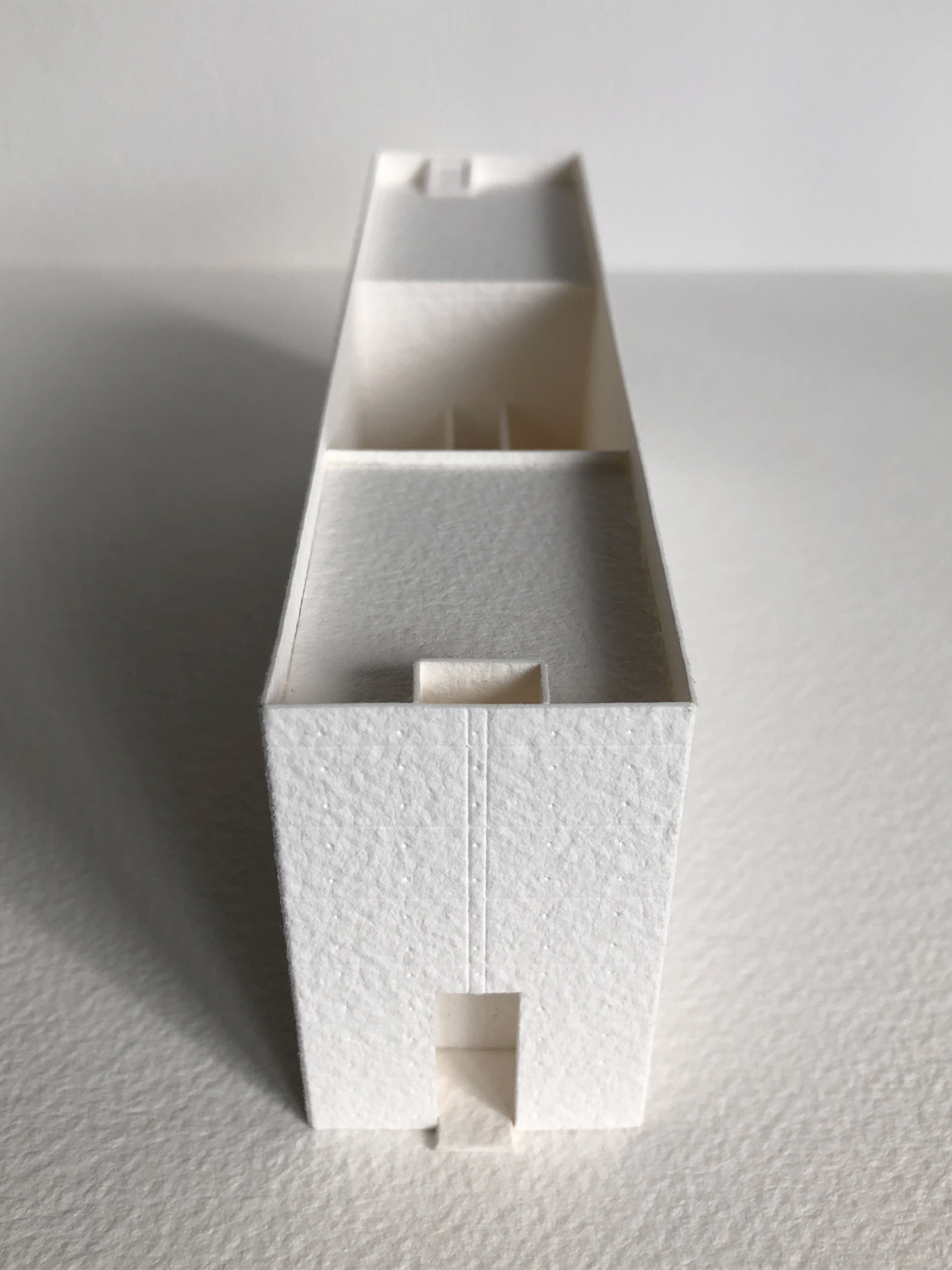
Front-Top view ©J-W.HWANG

I once mentioned a book that Tadao Ando edited; he led his laboratory at the University of Tokyo to build the paper models of Le Corbusier’s 106 houses. Why such a project? He concluded, “I hope they (young students) can learn as much from the architect’s life as from his architecture.” I am no longer a young student, but I am still learning from his life by making a model of his first house.

I used the cylinder-mould made watercolor paper; it’s a little stiff, but perfect for cutting, folding, and gluing to the edge. Plus, it has a particular grain that makes the gradation between light and shadow more interesting. 

©J-W.HWANG
More / Version française

Markthal (Market Hall), Rotterdam

Markthal, designed by MVRDV ©J-W.HWANG

Rotterdam is a city of architecture in its aesthetic excellence beyond practical feasibility; the Markthal, a combination of multi-family housing and covered market built in 2014 in the center of the city, would be a good example to observe a Dutch shift in architectural ideas. I went there to buy fresh stroopwafel, a Dutch classic, and the building was amazing. In fact, its arch-wise structure, which resembles a kind of wagon cover in western movies, comes from two housing entities sharing a roof; the gable ends of the housing entities create the entrances of the walk-through market. It looks simple, but the architect overcame several technical challenges, such as:

  • The glass walls of the entrances are composed by 148,5 cm x 148,5 cm windows hung around the steel cable structure similar to a tennis racket. It is the largest glass-window cable structure in Europe with 26 vertical and 22 horizontal cables allowing 70 cm of deflection for extreme wind loads. 
  • The inner wall painting is created by Arno Coenen and Iris Roskam. The original painting, a 1.47 terabytes digital file rendered by Pixar software, is separated and printed on 4,000 perforated aluminum panels.
  • The apartments have windows to the market. Mostly kitchens, dining rooms and storage are positioned on the market side, and the sound and smell proof triple-layer glasses are used for the windows.
More / Version française

Maison du livre, de l’image et du son François Mitterrand, Villeurbanne

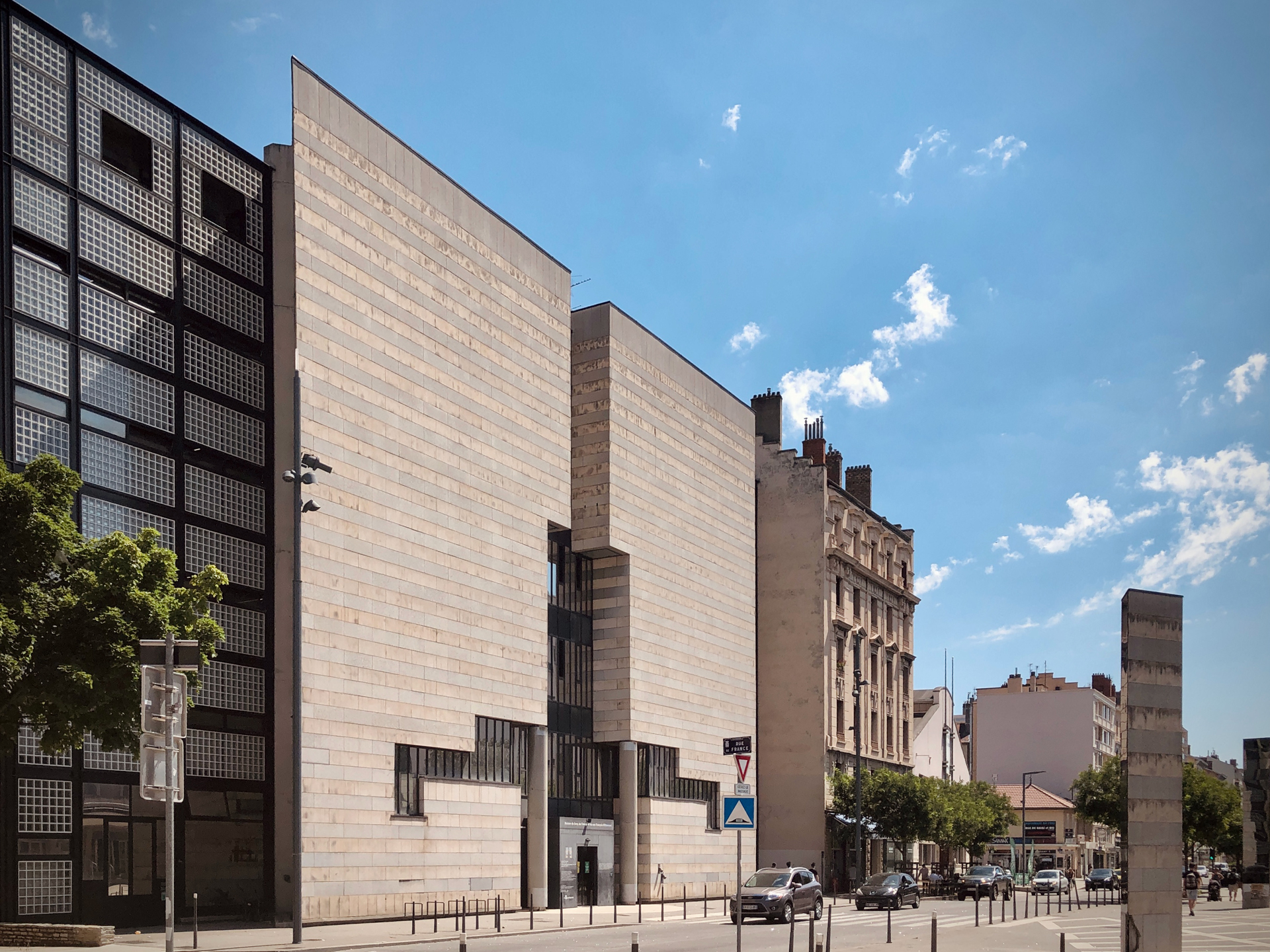
MARIO BOTTA IS a Swiss architect who has designed several buildings in my hometown, Seoul. As far as I remember, there was a brick tower near my home; its red brickwork was remarkable, in the middle of the achromatic vertical forest. As the architect intended, it is truly an urban landmark in one of the most densely built-up areas of the city. After a while, I discovered his other project in Villeurbanne, a satellite town of Lyon; it’s the Maison du livre, de l’image et du son François Mitterrand, which is part of the Médiathèque de Villeurbanne. 

©J-W.HWANG

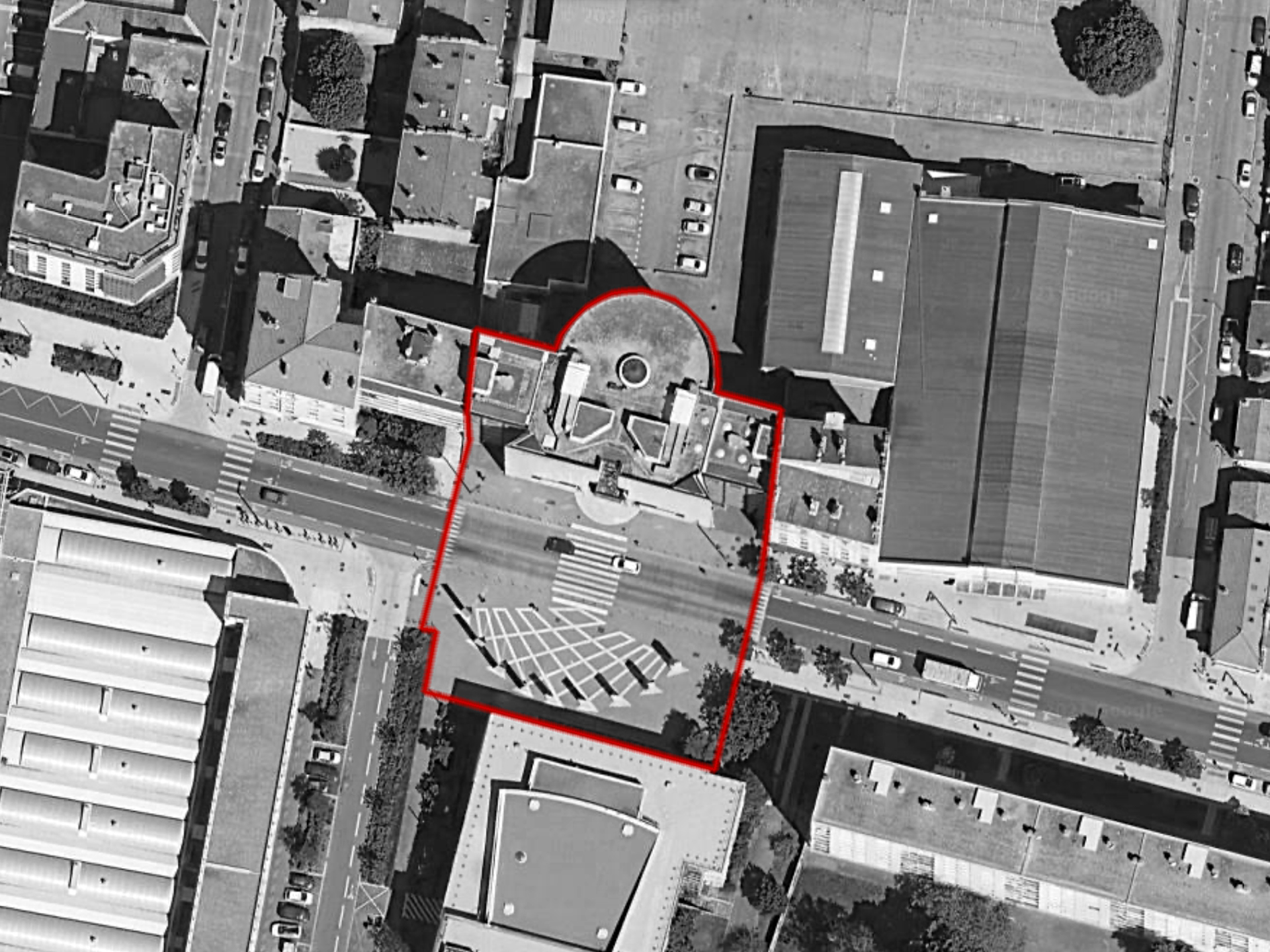
To expose its identity with the carefully designed facade, the building must have its open space set before the main entrance, as the Pompidou Center requires the spacious square to present its sophisticated facade in its entirety. However, there is a problem; the building faces a busy 2-lane road with narrow pavement each side. That’s why, on the opposite side, an open space occupying similar footprint of the building is landscaped with the lines on the ground that join the crosswalk before the main entrance. What a brilliant idea! 

©maps.google.com
More / Version française

Tadao Ando Details

A.D.A. Edita Tokyo 1996, ISBN 4-87140-551-6 C1052 ©J-W.HWANG

PATRICK SÜSKIND WROTE a short story about an artist who was dragging herself into the swamp of self-destruction because of a critic’s unintentional remark about the lack of depth in her paintings. In the middle of the ambiguous words, ‘depth’ becomes a single purpose for both the painter and the critic; then the relationship between them evolves from absence to wish. It is ‘Depth Wish’, a part of ‘Three Stories and a Reflection’ published in 1996.

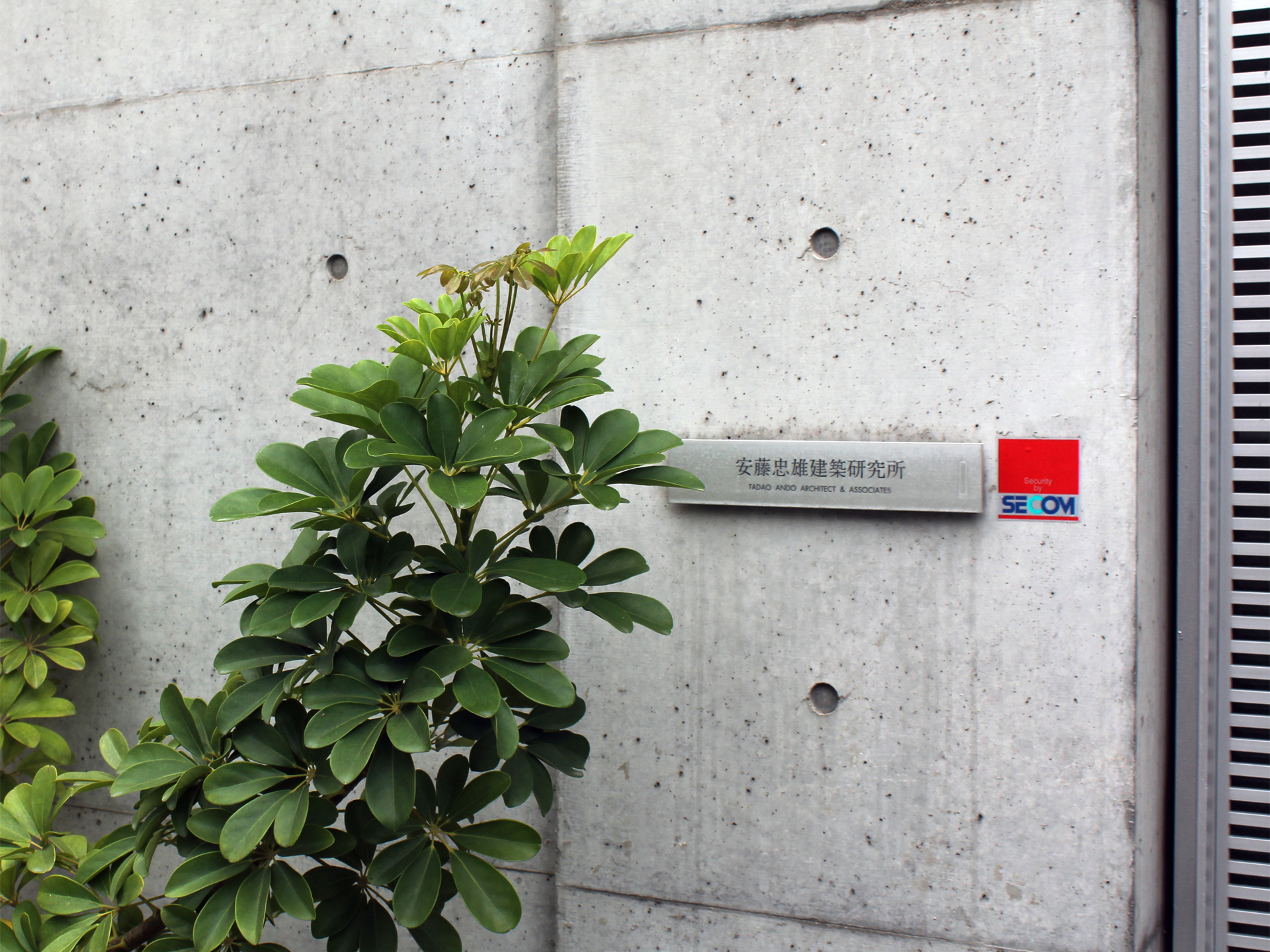
As an architect, I pursue the ‘detail wish’, by drawing what would be built. Amongst the uncertain ideas, the details can create a meaningful connection between architecture and reality. Photos are helpful, drawings are useful; that’s why I purchase this kind of book. This book is somewhat difficult to find outside Japan, I bought it when I was in Osaka. I also visited Mr. Ando’s office in Osaka on that occasion, but I was not able to meet him in person; I just saw the famous boxing glove and an old VHS tape of the Oscar De La Hoya – Bernard Hopkins match.

Note that the preface is written by Peter Eisenman.

TADAO ANDO ARCHITECT & ASSOCIATES ©J-W.HWANG
Version française

The Pompidou Center (le Centre Pompidou), Paris

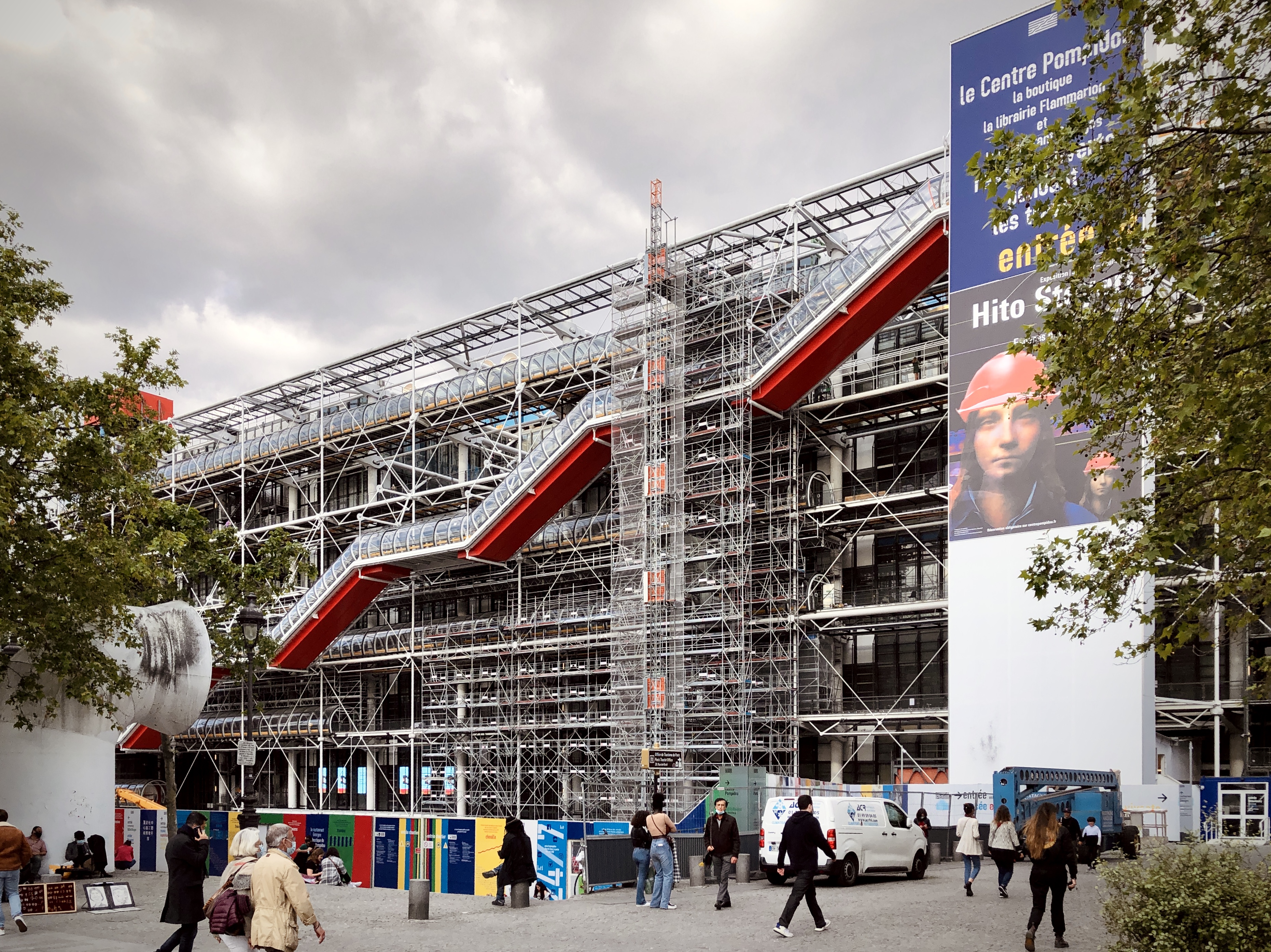
OPENED IN 1977 and once closed in 1997 for renovations, the Pompidou Center will be closed again in 2023 for 3 years. Soon after the first re-opening, Renzo Piano, a co-architect of the building with Richard Rogers suggested in an interview with the New York Times in 2000 that the center close every 25 years so its function could be rethought*; reportedly a half joke, somehow it goes as he said. For the second re-opening in 2027, the renovation includes asbestos removal, air treatment, fire stability, a structural audit, and overhaul of the electrical and heating systems aiming at a 40% reduction of the energy use.

OUVERT EN 1977 et fermé première fois en 1997 pour rénovation, le Centre Pompidou sera à nouveau fermé en 2023 pour 3 ans. Peu après la première réouverture, Renzo Piano, co-architecte du bâtiment avec Richard Rogers, a suggéré lors de l’entretien avec le New York Times en 2000 que le centre ferme tous les 25 ans afin que sa fonction soit repensée* ; il s’agirait d’une demi-blague, mais en quelque sorte il en est ainsi. Pour la deuxième réouverture en 2027, la rénovation comprend le désamiantage, le traitement de l’air, la stabilité au feu, un audit structurel, et la révision des systèmes électriques et de chauffage visant à réduire de 40% la consommation d’énergie.

The Pompidou Center, preparing the closure for renovations ©J-W.HWANG

* The New York Times, Showing a Rise From Rebellion to Respectability, Alan Riding, March 5, 2005

Creative Commons License